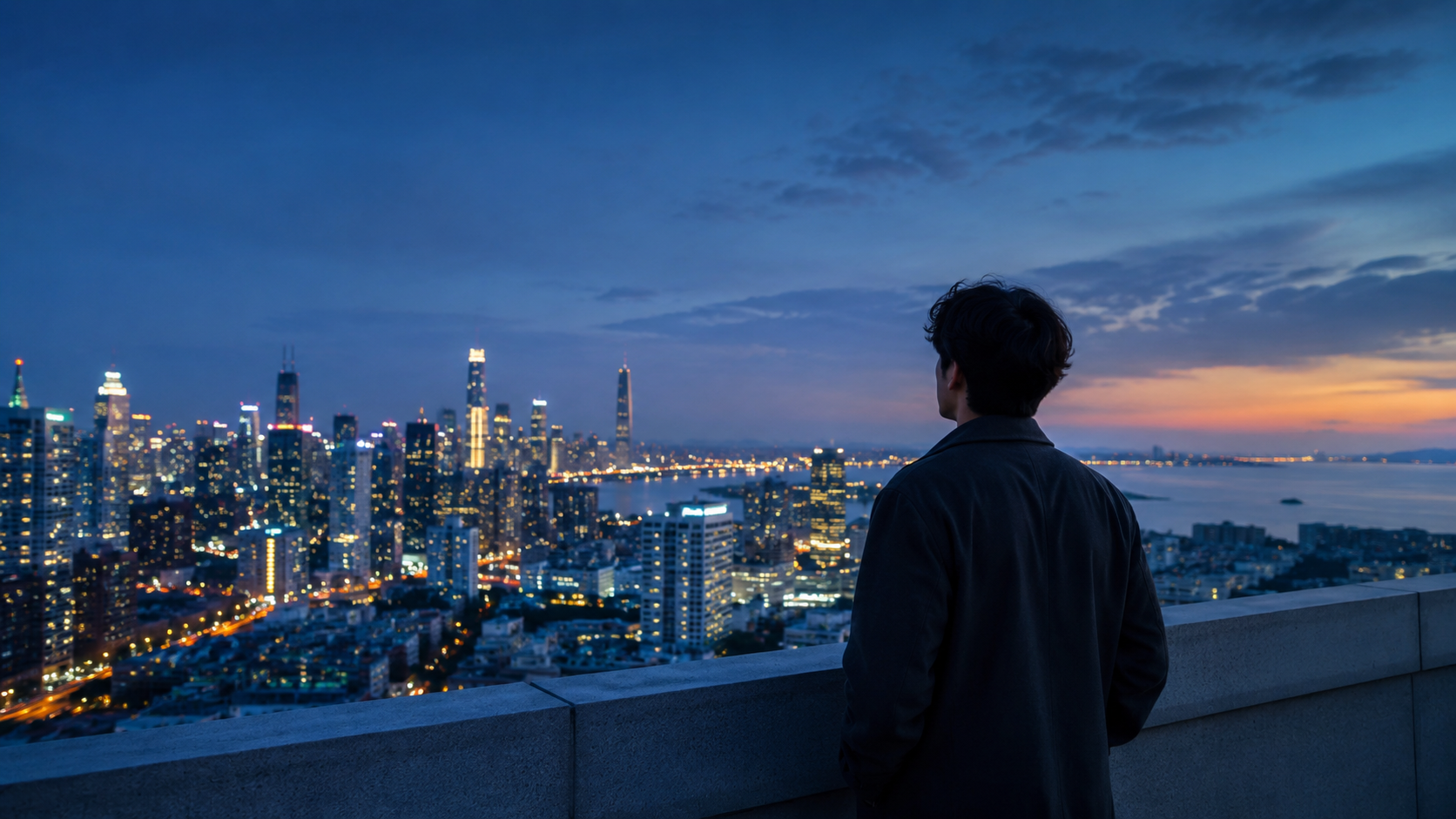
We talk a lot about personal personality.
Some people are extroverted. Some are introverted. Some love change. Some need stability. Some feel alive around people. Some recover in solitude. Some are fueled by competition. Some are restored by quiet.
But we rarely talk seriously about another truth:
Cities have personalities, too.
A city is not just a collection of buildings, roads, rents, weather, and population numbers. It has rhythm. It has mood. It has pressure. It has temptation. It rewards certain lifestyles and quietly discourages others.
Some cities feel like high-speed machines. Some feel like a cup of coffee slowly cooling in the afternoon sun. Some cities push people toward bigger ambition. Some bring people back to a quieter, more honest version of themselves.
Choosing a city is never only about choosing a location. At a deeper level, your personality is choosing a city personality it can live with.
Why the Same City Feels So Different to Different People
You have probably seen this happen.
One person moves to New York and feels completely alive. They love the speed, the opportunity, the density of people and movement. They may feel tired, but they also feel activated. Somewhere inside, they feel plugged into an electric current.
Another person lives in the same city and slowly becomes quieter. They hate the noise. They hate the crowd. They hate the long-term anxiety of high rent and the feeling of being surrounded by millions while still unable to find a few real friends.
Same city. One person feels free. Another feels trapped. Neither is wrong. They are simply in different relationships with the city.
A city does not affect everyone in the same way. It expands certain people and compresses others. It gives energy to some and quietly takes energy from others. That is the heart of city-personality fit.
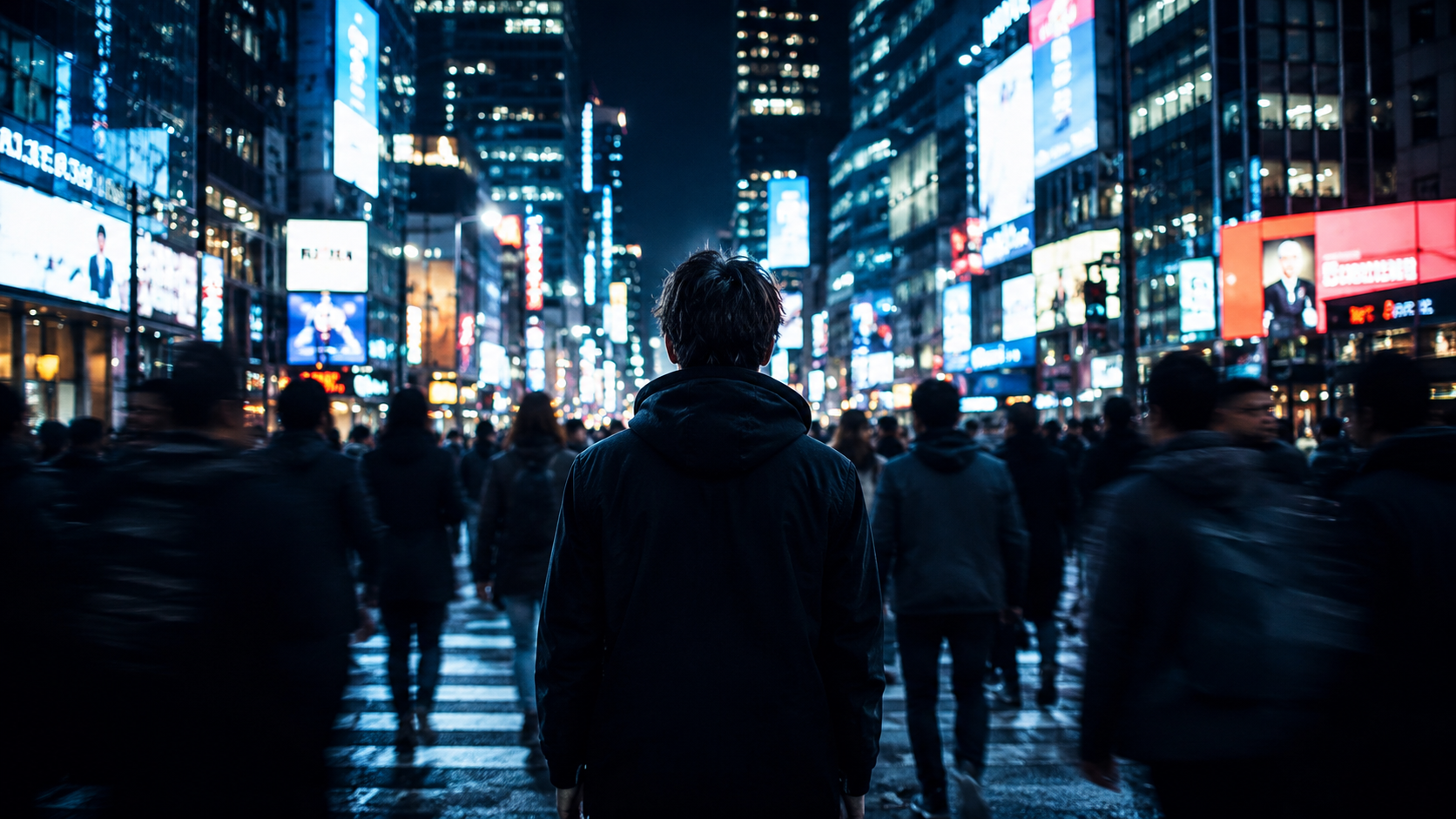
A city mismatch does not announce itself. It arrives as a quiet, accumulating sense of not belonging.
Every City Favors Certain Kinds of People
A city does not literally choose who belongs there. But its cost structure, job market, social style, culture, transportation, density, and pace naturally favor certain kinds of people.
A high-density global city often favors people who enjoy speed, tolerate uncertainty, and can turn pressure into momentum. For these people, the intensity of a large city is not destruction. It is sharpening.
A slower city often favors people who value daily rituals, need physical recovery, care about community, and want sunlight, walking, nature, and ease. For them, slowness is not a failure. It is the return of life.
But for others, a slow city feels frustrating — opportunities limited, information moving too slowly, life paused.
City personality is not about good or bad. It is about fit.
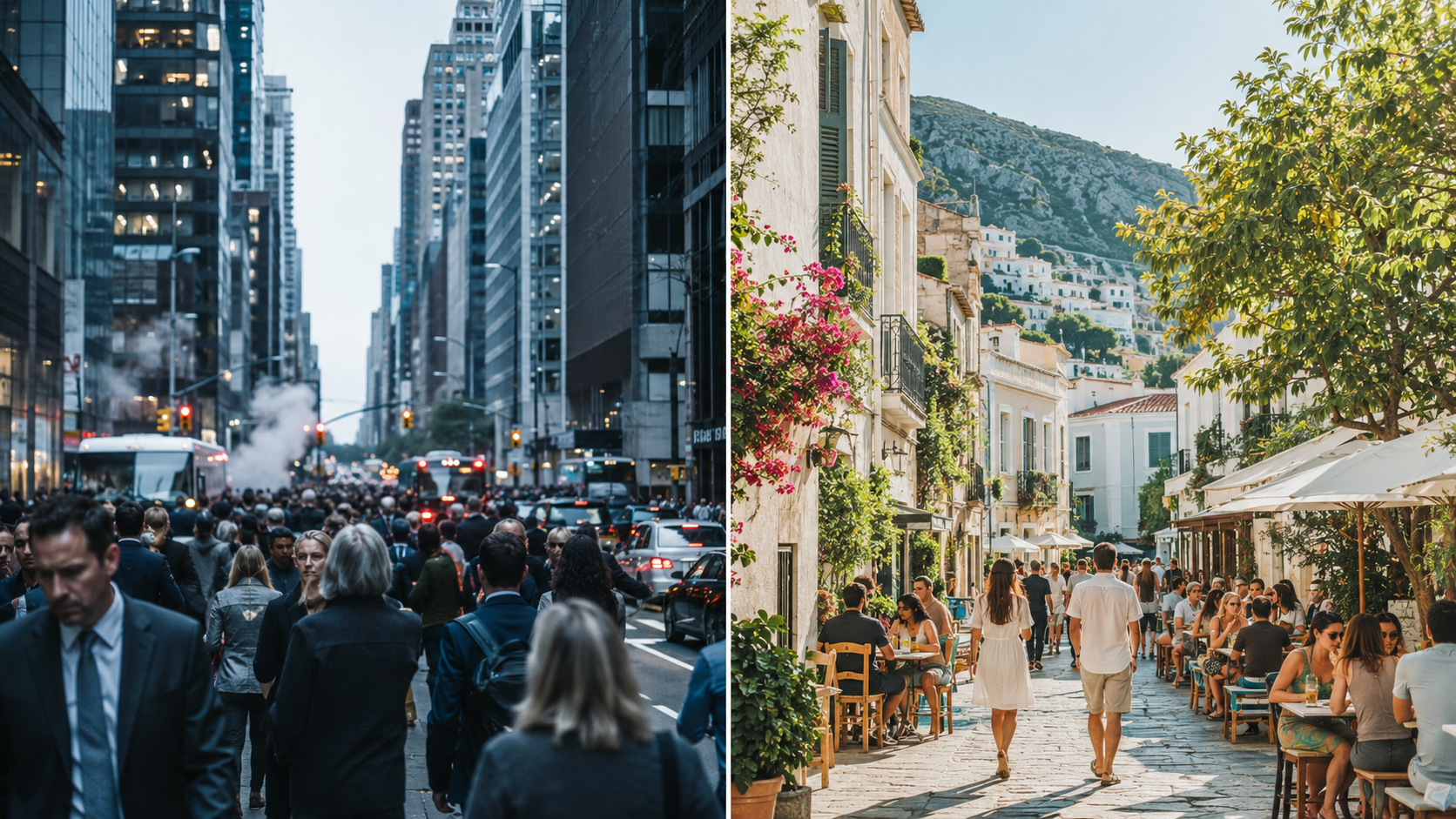
High-energy and slow-rhythm cities are not competing for a title. They are serving different human needs.
Your Personality Shapes How You Experience a City
We often assume that city experience comes mainly from external conditions — housing, weather, safety, transit, taxes, jobs. All of these matter. But your inner structure also shapes how you experience a city.
Are you sensitive to noise? How much social contact do you need? Can you handle long-term competition? Do you need nature to stay emotionally stable? Do you prefer anonymity, or do you need to be known by your community?
The same city condition can feel completely different depending on the person.
To one person, anonymity means freedom. To another, it means loneliness. To one person, fast pace means opportunity. To another, it means anxiety. To one person, community means warmth. To another, it means being watched.
A city is not an absolute answer. It is a mirror — reflecting what you truly need, and what you may have been ignoring for too long.
A Mismatched City Can Make You Misunderstand Yourself
When someone lives for years in a city that does not fit them, they may begin to misread themselves.
They may think: "Maybe I am not disciplined enough." "Maybe I am too sensitive." "Maybe I would be unhappy anywhere."
Self-reflection is important. But not every problem should be blamed on the self.
Sometimes a person is not weak. They are living in an environment that keeps exhausting them. Sometimes they have not lost ambition. They are in a place that gives them no meaningful opportunity to grow. Sometimes they are not fragile. They have spent too long in an environment that keeps their nervous system tense.
The danger of a wrong city is not only that it drains you. It may convince you that the drained version of you is the real you. This is the quiet truth at the heart of living in the wrong city — the friction is not always you. It is sometimes where you are.
The Right City Expands the Best Parts of You
A city that fits you does not turn you into someone completely different. More often, it gives room to parts of you that were already there.
If you are creative, the right city gives you inspiration and space. If you are ambitious, it gives you momentum. If you need connection, it gives you community. If you need recovery, it gives you sunlight, nature, and rhythm.
Some cities make you braver. Some make you softer. Some make you clearer. Some simply stop forcing you to fight your environment every day.
That is not magic. It is fit. A better environment lowers the resistance between who you are and how you live.
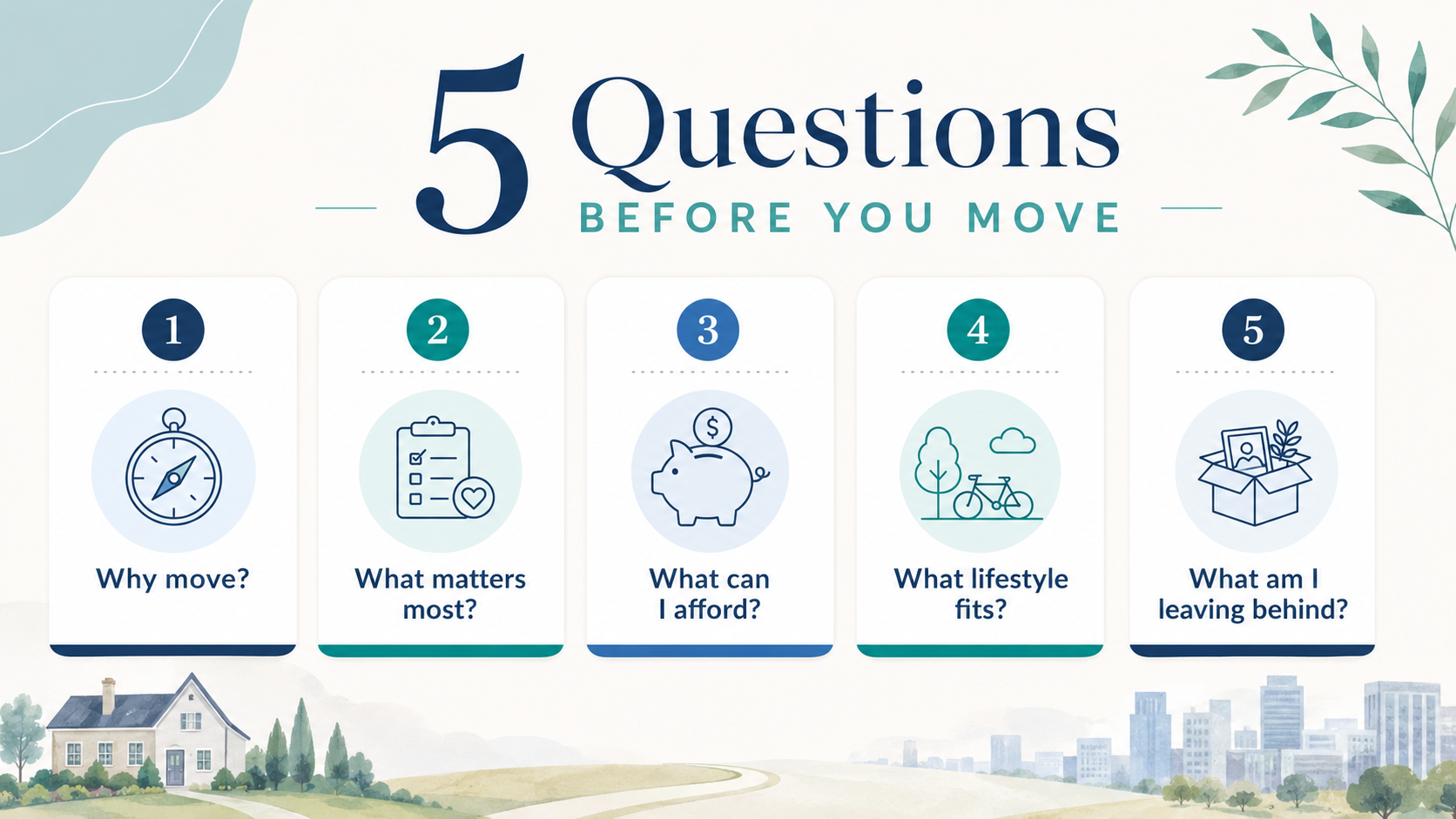
Before committing to a city, ask whether your daily life there would feel lighter — or heavier.
What Kind of City Personality Do You Need?
You may need a high-energy city — full of opportunity, speed, competition, and information flow. You may get tired there, but you also feel activated. You need forward motion.
You may need a nature-healing city — with sunlight, water, slower mornings, and room for the body to breathe. You do not need a bigger stage right now. You need soil that restores your life.
You may need a cultural-soul city — with beauty, history, art, and emotional richness. You are not only looking for convenience. You are looking for a place that makes your inner life larger.
You may need a community-oriented city — with familiar faces, local rituals, stable relationships, and the feeling of being connected. For you, belonging is not a bonus. It is quality of life.
You may need a freedom-and-flow city — that supports remote work, light living, and a more open version of identity. You do not want one place to define you. You want the world to help you redefine yourself.
Understanding which of the 8 City Soul types resonates with you can help clarify which city personality you actually need right now.

A considered move begins not with logistics, but with the question: who am I becoming, and what kind of city can hold that?
Do Not Only Ask, "Do I Like This City?"
Many people fall in love with cities while traveling. A few days of sunlight. A charming café. A perfect view. Then they say: "I want to move here."
That feeling is valuable. But liking a city is not the same as being able to build a life there.
Travel shows you a city's surface charm. Living reveals the whole system — rent, bills, visas, taxes, healthcare, loneliness, long-term adaptation.
You need to know whether you would still like the city on an ordinary Tuesday afternoon. You need to know whether the city can hold you when you are tired, financially stressed, or socially alone.
The deeper question is not only: "Do I like this city?" It is: can I become a more stable, alive, and honest version of myself here?
City Fit Changes Over Time
The city that fits you at 25 may not fit you at 45. The city that fits you while building a career may not fit you when you need health, stability, and peace. The city that helps you prove yourself may not be the city that helps you care for yourself.
Your City Soul is not a fixed label. It is a stage-aware map. It helps you ask: what do I need now? What will I need next? Is this city supporting my evolution, or keeping me attached to an older version of myself?
If a city you once loved no longer fits you, that does not mean you failed. It may simply mean you changed. A mature life allows the environment to evolve with the person.
This is also why so many people change completely after moving to a new city — not because the city transformed them, but because it finally stopped working against them.

The right city does not ask you to be someone else. It simply gives you room to become more yourself.
A Good Move Is a Re-Match Between You and Place
At a deeper level, moving is a re-match. You are asking: who am I now? What do I need? Who am I becoming? What kind of city can support that change?
City choice is not only a geographic question. It is an identity question. A rhythm question. A values question. A question about your relationship with your future self.
A good AI relocation planning report can help you work through the practical numbers clearly. But underneath all the data is one deeper question: what kind of city personality actually fits you?
You may not need a more famous city. You may need a more fitting one.
Find Your City Soul
Take the free quiz to discover which cities match your personality, values, and the life you are building.
Get Your Personalized Moving Cost Report
Full cost breakdown, visa guide, neighborhood analysis, and 90-day action plan — usually delivered to your email within a few minutes after payment.