
For decades, the traditional geography of opportunity seemed obvious.
People moved toward New York, London, Paris, Los Angeles, Amsterdam or other major Western cities for higher salaries, stronger institutions, better universities and access to global careers.
That map is becoming more complicated.
A remote worker earning in dollars or euros can now sit in Kuala Lumpur, Bangkok, Chiang Mai, Bali or Da Nang and remain connected to clients and companies thousands of miles away.
A retiree no longer has to assume that retirement means staying in the same country where the money was earned.
An entrepreneur can ask a question that would have sounded unusual twenty years ago:
If my income is portable, why must my cost structure remain Western?
That question is helping Southeast Asia move from the edge of the relocation conversation toward its center.
But there is an equally important second question:
What do you give up when you move?
Because Southeast Asia is not simply a cheaper version of Europe or America.
It is a different operating environment.
And that difference can be either the reason the move works—or the reason it fails.
The New Geography of a Good Life
The attraction is easy to understand.
Housing costs have become a major pressure point in many Western cities. Everyday services are expensive. Healthcare can be financially stressful in some countries and slow or difficult to navigate in others. Childcare, transportation, insurance and dining out can consume an increasingly large share of household income.
Meanwhile, parts of Southeast Asia offer something that feels almost counterintuitive to someone arriving from London, New York or San Francisco:
A lower-cost life does not always look like a lower-quality life.
A modern condominium may include a swimming pool, gym and security.
Restaurants can remain part of normal life rather than an occasional luxury.
Private healthcare may be accessible in major cities.
Domestic help, transportation and everyday services can cost far less than their Western equivalents.
And tropical weather can radically change how much of life happens outside the home.
But this is where the analysis needs to become more careful.
A person earning a local salary and a person earning remotely in dollars are experiencing two completely different versions of Southeast Asia.
That distinction matters enormously.
Advantage 1: Geographic Arbitrage Is Still Real
The strongest financial argument for Southeast Asia is straightforward.
If income remains tied to a high-income economy while major expenses shift to a lower-cost economy, disposable income can increase substantially.
That difference can affect more than restaurant bills.
It can change:
housing quality;
savings rates;
retirement timelines;
travel frequency;
access to personal services;
the amount of financial pressure attached to everyday decisions.
But MovingCOST would frame this differently from the usual “live like a king for $2,000 a month” internet cliché.
The objective is not to maximize luxury. It is to improve the relationship between money and life.
Someone who reduces monthly spending but becomes professionally isolated has not necessarily improved their life.
Someone who pays less rent but spends years worrying about immigration status may not have gained as much freedom as expected.
Cost matters.
But cost is only one layer of mobility.
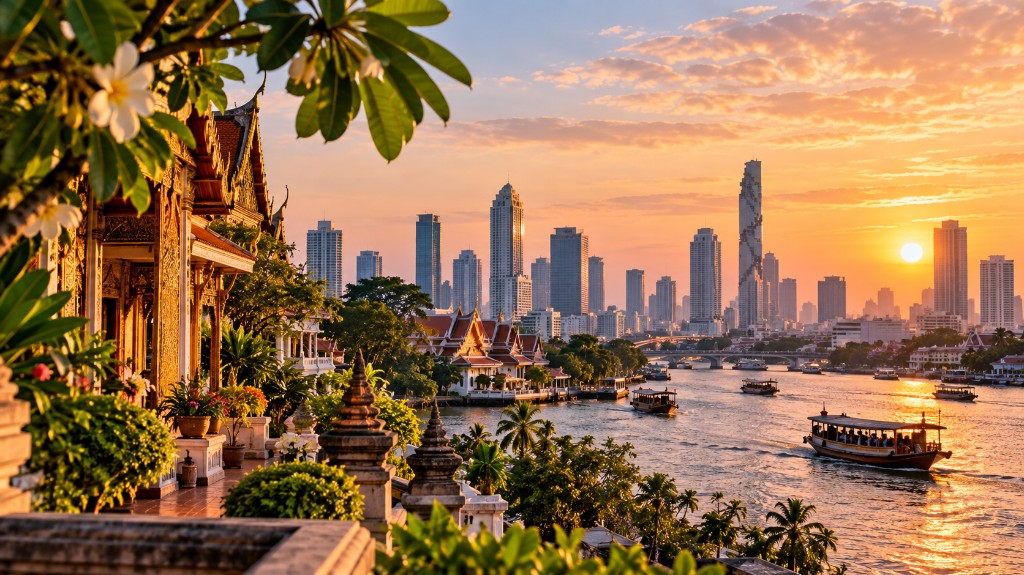
For many internationally mobile households, the attraction is not simply lower prices but a different relationship between cost, space and everyday comfort.
Advantage 2: Southeast Asia Is Building for Mobile People
Another major change is institutional.
Countries in the region increasingly recognize that remote professionals, retirees, entrepreneurs and internationally mobile residents bring money without necessarily competing for traditional local jobs.
Thailand's official visa system now includes the Destination Thailand Visa for workcation-related stays alongside Long-Term Resident, retirement and other long-stay categories (Thailand e-Visa official website). Malaysia's DE Rantau programme explicitly targets foreign digital professionals; MDEC says its pass can run from three to twelve months and can be renewed for up to another twelve months for eligible applicants.
That does not mean immigration has become frictionless.
Malaysia, for example, has posted a notice that DE Rantau applications are experiencing processing delays because of technical integration and data-synchronization issues (Malaysia Digital Economy Corporation (MDEC)).
This illustrates an important principle:
A country can be welcoming in policy while still being bureaucratic in practice.
For movers, both realities matter.
Advantage 3: You Can Buy Back Time
This may be the most underestimated advantage.
People usually compare countries using rent, taxes and food.
But a life is also made of time.
How long is the commute?
How much time is spent maintaining a large home?
Can you afford occasional cleaning help?
Can you eat conveniently without cooking every meal?
Can you live close to cafés, parks, gyms and daily services?
In some Southeast Asian cities, a Western-income household may be able to outsource or simplify parts of everyday life that consume significant time in Europe or North America.
The result is not merely cheaper living.
It can be more usable life.
For someone building a company, writing a book, creating art, raising children or simply wanting a slower pace, that can be more valuable than the rent difference.

Affordable everyday services and dining can change not only a household budget, but also how much time is spent maintaining daily life.
Advantage 4: Asia Becomes Your Backyard
Moving to Southeast Asia also changes the geometry of travel.
From Kuala Lumpur, Bangkok or Singapore, large parts of Asia become short-haul destinations rather than once-a-year expeditions.
Japan.
Korea.
Vietnam.
Indonesia.
Thailand.
Malaysia.
Hong Kong.
Taiwan.
Even Australia becomes substantially closer.
For someone whose interests, business or family increasingly connect to Asia, this geographical repositioning can matter as much as cost.
You are not merely choosing a cheaper city.
You are changing what is near you.
That can reshape a life.
Advantage 5: The Lifestyle Can Feel Lighter
This is subjective, but important.
Warm weather changes routines.
Street life changes routines.
Late-night dining changes routines.
Dense mixed-use neighborhoods change routines.
In many Southeast Asian cities, everyday life spills naturally into cafés, malls, markets, parks, food courts and public spaces.
For someone arriving from a car-dependent suburb or a cold, expensive Western city, the difference can feel liberating.
But lifestyle attraction should never be confused with vacation attraction.
Loving Bangkok for ten days is not the same as living there for two years.
Loving Bali in January says little about how you will feel about traffic, humidity, bureaucracy or infrastructure after the novelty disappears.
Which brings us to the other side of the equation.
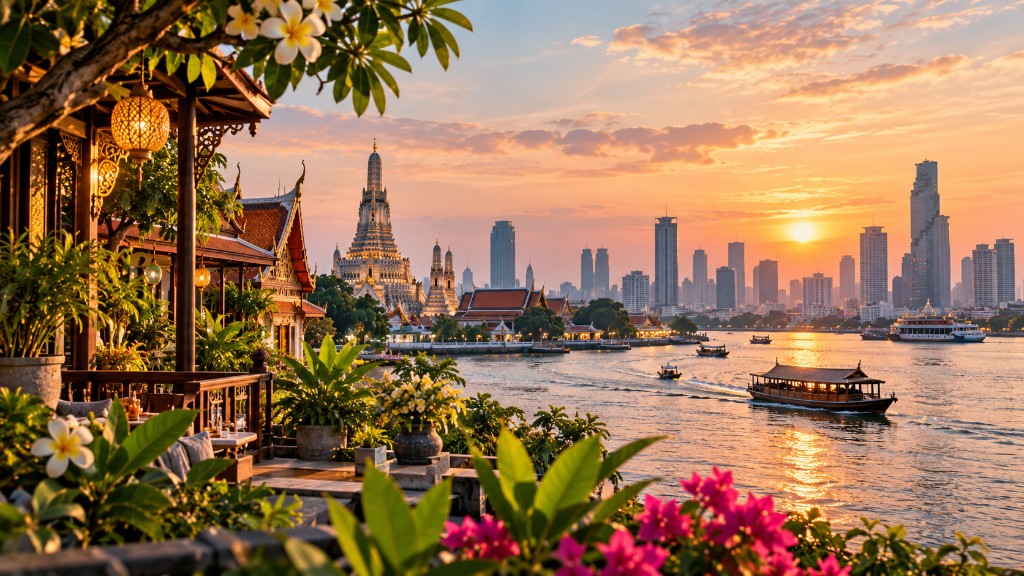
The appeal of Southeast Asia is also cultural: daily routines, public space, food and climate can create a very different rhythm of life.
Disadvantage 1: You Are Trading Familiar Systems for Unfamiliar Ones
Western movers often underestimate the value of institutional familiarity.
You know how your bank works.
You understand contracts.
You know how healthcare is accessed.
You know what consumer protection means.
You understand your tax system—or at least know whom to call.
You know what happens if a landlord, employer or business partner causes a problem.
Move abroad and much of that intuitive knowledge disappears.
The destination may work perfectly well.
You simply do not yet know how it works.
That creates friction.
Language can amplify it.
So can different expectations around documentation, hierarchy, negotiation and response times.
This does not make one system better and another worse.
It means competence does not automatically cross borders.
Disadvantage 2: Long-Term Residency Is Not the Same as Belonging
A visa gives permission to stay.
It does not necessarily provide permanence.
Rules change.
Income requirements change.
Programmes change.
Applications can be delayed.
Renewals may require new documentation.
Some countries provide excellent long-stay options without offering a straightforward route toward permanent residence or citizenship.
That is perfectly acceptable for someone seeking three interesting years abroad.
It may be less attractive to someone seeking a country in which to build the next thirty years.
This is why MovingCOST should distinguish between:
a place to live now
and
a place to build permanent roots.
They are different decisions.
Disadvantage 3: Tax Can Destroy a Beautiful Spreadsheet
A common relocation fantasy goes like this:
“My rent will fall by $2,000 a month, therefore I will save $24,000 a year.”
Maybe.
But international life introduces questions that a cost-of-living calculator cannot answer alone.
Where are you tax resident?
Where is your company located?
Where is income generated?
Does your home country continue taxing you?
What happens to investment income?
How are pensions treated?
What reporting obligations remain?
Americans face particularly important cross-border considerations because U.S. citizens generally retain federal tax filing obligations even while living abroad.
Other nationalities face different rules.
The point is not that moving creates an impossible tax problem.
It is that:
A relocation decision made before understanding tax residency is unfinished.
Professional cross-border tax advice may be one of the highest-return expenses in the entire move.
Disadvantage 4: Healthcare Quality Is Uneven
“Southeast Asia has great healthcare” is both true and dangerously incomplete.
The region contains internationally respected private hospitals and excellent doctors.
It also contains enormous variation by country, city, hospital and specialty.
A healthy 32-year-old remote worker and a 72-year-old retiree with complex medical needs should not evaluate the region using the same criteria.
Ask:
Where is the nearest hospital you would actually trust?
Can your insurance cover it?
What happens during a major emergency?
Would you need to travel to another city—or another country—for specialized treatment?
What happens as you age?
Healthcare should be evaluated not by the best hospital in the country, but by the care realistically available to you when you need it.
Disadvantage 5: Distance Is Cheap Until Family Needs You
A flight map can make the world look small.
Emotionally, it may not be.
If your parents are aging in Europe or America, a twelve-hour time difference matters.
If your children live thousands of miles away, spontaneous weekends disappear.
If an emergency happens, “I'll fly home” may mean twenty hours of travel.
International mobility creates freedom partly by loosening geographic ties.
But those ties may have been valuable.
For some people, this is the biggest hidden cost of moving abroad.
It cannot be measured in dollars.
Disadvantage 6: Climate Is a Lifestyle Variable, Not a Footnote
The tropical dream comes with tropical realities.
Heat.
Humidity.
Monsoon seasons.
Air quality issues in some locations and seasons.
Mosquitoes.
Mold.
Flooding in certain areas.
Someone who loves thirty degrees Celsius beside a swimming pool may feel differently after walking twenty minutes to an appointment.
Climate should therefore be tested through ordinary life—not just holidays.
Spend time there during the less glamorous season.
That is when a destination begins to reveal itself.
The MovingCOST Reality Check
Consider two hypothetical households.
Household A
Lives in a major Western city.
Income: $140,000
Housing and core living expenses: $7,000/month
Strong professional network.
Close to family.
Clear long-term residency and legal rights.
Household B
Keeps roughly the same remote income but moves to Southeast Asia.
Housing and core living expenses: $4,000/month
Potential annual lifestyle-cost difference: roughly $36,000
Better housing.
More services.
More travel.
But also:
new immigration requirements;
international tax complexity;
distance from family;
different healthcare planning;
less institutional familiarity.
Which household has the better life?
There is not enough information to answer.
And that is exactly the point.
The $36,000 difference matters.
But so do the things that cannot be placed neatly into that calculation.
This is an illustrative scenario, not a universal cost estimate. Actual expenses, taxes, immigration requirements and savings vary substantially by country, city and household.
Who Is Southeast Asia Especially Good For?
The move tends to make more sense for people whose income is portable.
Remote professionals.
Online business owners.
Consultants.
Creators.
Some entrepreneurs.
Financially independent households.
Certain retirees.
People who actively want a cultural change rather than merely cheaper rent.
The region can also be attractive to people who value travel, food, warm weather and urban convenience more than large private homes or geographic proximity to their original social network.
But there is another category that deserves caution.
Someone whose career depends heavily on a physical professional network in London, New York or Silicon Valley may save money abroad while weakening future earning power.
A lower-cost life can become expensive if it quietly reduces your long-term opportunities.
Malaysia, Thailand, Vietnam or Indonesia?
There is no single “Southeast Asia lifestyle.”
That phrase hides enormous differences.
Malaysia can appeal to people who value English usage, infrastructure, multicultural cities, regional connectivity and relatively easy everyday adaptation. Its DE Rantau programme is specifically designed for eligible digital professionals, although current processing delays are a reminder that immigration administration still requires patience (Malaysia Digital Economy Corporation (MDEC)).
Thailand combines a mature international lifestyle ecosystem with several different long-stay routes; its official e-Visa platform currently lists DTV, LTR, retirement and Thailand Privilege among the available categories (Thailand e-Visa official website).
Vietnam offers extraordinary energy, food and value in cities such as Da Nang and Ho Chi Minh City, but a prospective long-term resident should investigate the immigration path appropriate to their own circumstances rather than assuming tourist access equals residency.
Indonesia, particularly Bali, offers one of the world's most established international remote-work communities—but island lifestyle, traffic, infrastructure and immigration realities need to be evaluated separately from the social-media image.
The right question is therefore not:
“Is Southeast Asia better?”
It is:
“Which operating environment fits the life I am trying to build?”

A destination should be tested through ordinary life and ordinary seasons—not only through the version designed for visitors.
Try the Region Before You Choose the Country
For many people, the smartest strategy is not immediate migration.
It is experimentation.
Spend one to three months in a candidate city if immigration rules permit.
Rent rather than buy.
Live in a normal neighborhood.
Use the healthcare system.
Work your normal schedule.
Experience traffic.
Shop for groceries.
Go through a rainy week.
Deal with a delivery problem.
Try to make friends.
Then move to another city.
A year of deliberate experimentation can reveal more than hundreds of hours of YouTube videos.
The world has become mobile enough that the first decision does not have to be permanent.
The Bigger Shift: From Immigration to Life Design
Perhaps the most interesting change is conceptual.
Previous generations often asked:
Where can I immigrate?
A growing group of globally mobile people can ask something different:
Where should I live for this stage of my life?
That might mean Southeast Asia for five years.
Europe later.
Returning home eventually.
Or discovering that the first move created a permanent home somewhere unexpected.
This is not necessarily about escaping the West.
Nor is it about declaring Asia superior.
It is about recognizing that technology, remote income and new residency programmes have increased the number of realistic choices available to some people.
And once choice expands, geography becomes part of personal strategy.
The Bottom Line
Southeast Asia can offer something unusually powerful to Americans and Europeans with portable income:
the possibility of lowering the financial cost of life without necessarily lowering its experiential quality.
But the best relocation decisions are not made by comparing rent alone.
They compare:
money;
time;
healthcare;
tax;
legal stability;
career opportunity;
family;
climate;
culture;
and belonging.
A cheaper country can produce a richer life.
It can also produce a cheaper life with more complications.
The difference depends less on Instagram scenery than on whether the destination actually fits the person moving there.
The smartest international move is not toward the cheapest country. It is toward the place where your money, time and priorities work better together.